Sign in
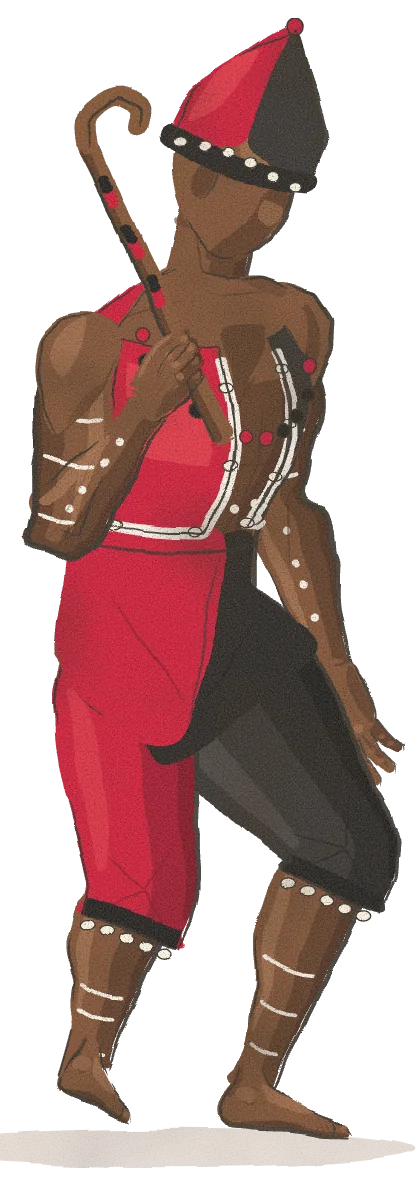
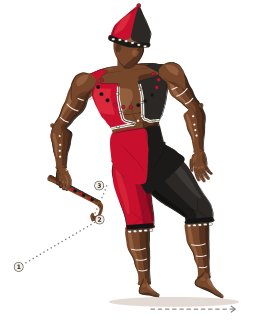
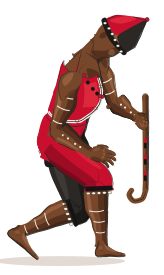
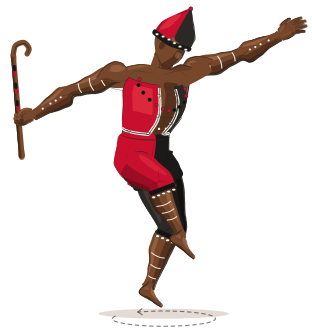
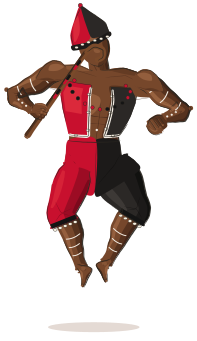
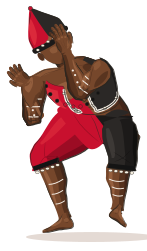
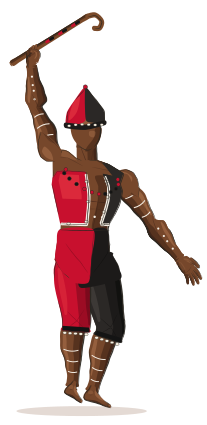
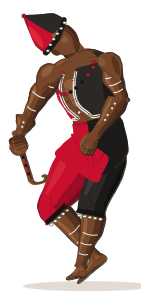
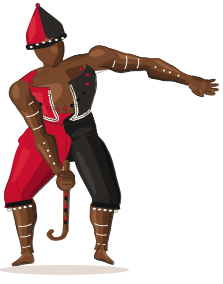
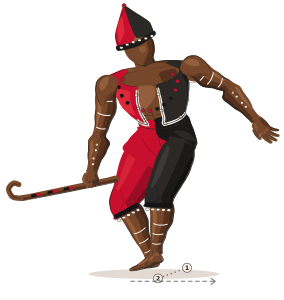
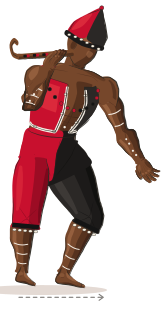
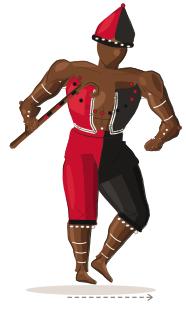
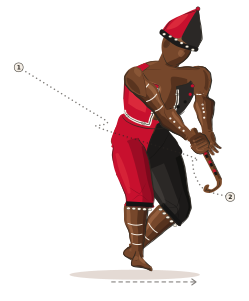
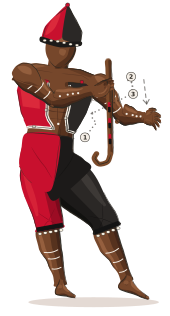
Elegguá, dance figure
Orisha of the paths · Number 3

Elegguá

Also Eleguá · Èṣù-Ẹlẹ́gbára

¡Laroyé!

Pronunciation: la-ro-YÉ
Elegguá, dance figure
See the danceToques and chants

Summary

  • Number3
  • DayMonday, preferably in the morning
  • ColorsRed and black
  • DomainsOwner of paths, doors and crossroads. Owner of destiny: he opens or closes. Messenger between the orishas and people. Gatekeeper of the monte (the wild bush) and the savanna.
Other names
Eleguá, Elewa, Elegbá, Elegbara · Èṣù-Ẹlẹ́gbára (yorùbá)
Feast day
Varies by source.
  • January 6 and June 13 (Saint Anthony) · F1
  • June 13 and March 3 · F15
Sources differ
Syncretism
Holy Child of Atocha; Saint Anthony of Padua

Character

He is the old child of the Regla de Ocha: mischievous, a joker and playful, and at the same time the oldest, the one who guards every door. He likes toys, sweets, gossip and conversation. He is the messenger: no offering reaches the other orishas unless he first receives his share and gives permission. That is why he is also the owner of destiny: he opens and closes the paths and joins opposites.

  • Mischievous
  • Child-elder
  • Messenger
  • Cunning
  • Unpredictable
  • Guardian

In the dance: You see it in the unpredictable: jumps, contortions, a child's faces, jokes, vanishing and reappearing, quick spins on one foot. Graciela Chao describes him as “explosive”, with jumps and somersaults.

Traits
  • Mischievous
  • Child-elder
  • Messenger
  • Cunning
  • Unpredictable
  • Guardian
In the dance

You see it in the unpredictable: jumps, contortions, a child's faces, jokes, vanishing and reappearing, quick spins on one foot. Graciela Chao describes him as “explosive”, with jumps and somersaults.

Tools

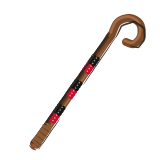
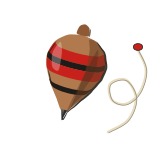
4 tools
With Oru Pro

Each tool has its own lesson: what it is, how it is held and how it is danced with.

Not depicted (consecrated objects)
  • Crown

Not depicted: consecrated or altar objects, or ones pending review.

Dance

Light, fast and broken: sudden changes of direction, jumps, dead stops and spins. The base shared by every orisha: knees bent, weight low, torso tipped slightly forward. With Lalubanché, the movement turns pendular and more fluid.

Base: knees bent, weight low and torso forward.

At the toque, the other dancers imitate his movements, moving counterclockwise.To be verified

Yvonne Daniel associates Elegba with the feet as a part of the body.To be verified

The tempo is set by Latopa and Lalubanché, livelier with Ñongo and Chachalokafún, over the 6/8 clave.

With Lalubanché, arms and torso swing forward and back.To be verified

Clown and acrobat: high leaps, contortions and jokes (Ortiz); his dance is clowning (Murphy). Hagedorn speaks of his “crooked step”.

Movements

13 movements
FreeElegguá: LalubanchéLalubanchéAccording to Avante, it is the rhythm only Elegguá dances. García treats it as Elegguá's rezo (prayer), his first toque.ProElegguá: Clearing the path with the garabatoClearing the path with the garabatoMime of clearing a path through the undergrowth: he is the owner of the paths. Ortiz: he moves it from side to side like someone pushing back the brush or opening a trail in the jungle.ProElegguá: Spin on one footSpin on one footThe messenger's speed and unpredictability. Ortiz gives it as a frequent step, hopping on one foot and spinning. According to Villamil (Matanzas), he only goes onto one foot when the chant tells him to.ProElegguá: Leaps and facesLeaps and facesChildhood and play: jumps, contortions, faces and jokes.ProElegguá: Hide and reappearHide and reappearHe vanishes and suddenly reappears. EcuRed describes it in possession (“he will run and get behind the door”). On stage it is done as a game of hide-and-seek; it is not taught as an imitation of possession.ProElegguá: Agongo AgéAgongo AgéA shared step: Elegguá, Ochosi and Oggún dance it in very similar ways; García also sees it in Ochún (Ofeicó erima) and Obatalá (Eleri efa). For Elegguá it is one of the three Latopa calls the dancer answers. It starts on 4, when the chorus sings “agó”.ProElegguá: La Topa, Ñongo and Chachalokafún stepsLa Topa, Ñongo and Chachalokafún stepsTeaching sequence: Intro, Lubanché, La Topa, Chachalokafún (Ñongo according to Avante). In Latopa the iyá plays six calls; the dancer answers three: Agongo agó, Ago Elegguá bukenke and Abukenke. The akpwón switches from one to another whenever he wants. The idea of a hand gesture specific to “La Topa” does not appear in García (fists in front).ProElegguá: Side step with a sweepSide step with a sweepA bridge to salsa. Weak source (a salsa blog).ProElegguá: Ago Elegguá bukenkeAgo Elegguá bukenkeIt answers one of the Latopa calls. Doing just the Latopa step is fine too.ProElegguá: AbukenkeAbukenkeA Latopa call. The same clave play comes back in Ochún (Ochakiniwa), Yemayá (Chikini) and Changó (Wolenche).ProElegguá: Tere mina tereTere mina tereThe warriors' toque (Ode, Ajagun).ProElegguá: Barasuayo por debajoBarasuayo por debajoGarcía also sees this toque in Ochún (Abebe Ochún), Ochosi (Morokoro) and Obatalá (Iyá lawa).ProElegguá: Kinima eyoKinima eyoGarcía also sees this toque in Oggún and Babalú Ayé. The garabato gesture looks like no. 2, “Clearing the path”: check whether it is the same.
With Oru Pro

The first lesson is free: “1. Lalubanché”. With Oru Pro, every step-by-step lesson, the stage version, common mistakes and the videos.

  • 13 lessons
  • Stage version
  • Common mistakes
  • 9 videos

Toque, canto, step

With Oru Pro

Each toque with what is sung over it and what is danced: the call, the answer and the step, together.

  • Latopa
  • Lalubanché
  • Ñongo
  • Chachalokafún
  • and 6 more

History and patakíes

With Oru Pro

Elegguá’s history and patakíes, each with its teaching and its versions.

  • The prince and the coconut
  • Elegguá heals Olofin
  • The forgotten guardian
  • and 3 more

Paths

18 in the list
Sources differ: 21 or “101 or more” (EcuRed); 201 for Eshu according to Ifá (Bolívar); 101 for Eshu in Ocha and 256 for Elegguá in Ifá (Lele). The EcuRed appendix lists 60.Sources differ
  • AbailéMessenger who carries the ebbós (offerings) to their destination; he helps in the house of Ocha.To be verified
  • AfráHe goes with Babalú Ayé and protects against contagious diseases. White and black.To be verified
  • AgbanukuéGuardian of the ilé; he blinds anyone who arrives with bad intentions.To be verified
  • AkéruErrand boy who carries messages back and forth.To be verified
  • Agongo OgoHe carries a knotty club to attack or defend himself.To be verified
  • AkesanOriginally from the kingdom of Oyó.To be verified

Other names: Okada, Sokere, Odara, Elegbara, Agogo, Alaketu, Aselu, Kaminalowá, Igide, Dare, Afrodi, Abanunkue, Abalonke, Aberu

See all 18 caminosShow less
  • Alá Lu BanshéHe rules destiny, opens or closes paths; he must be present in every ebbó. He shares a name with the Lalubanché toque (link not confirmed).To be verified
  • Alaroye AkokelebiyúA mischievous, bad-tempered child.To be verified
  • LaroyéOchún's companion; small and chatty; he lives behind the door.To be verified
  • AlagguanaHe is everywhere, but prefers the savanna and the monte. He is associated with the Ánima Sola. Mason glosses Alagbana as “the one who lurks in lonely places”.To be verified
  • Awó BaraDiviner from Oyó land; he watches over the babalawo's house.To be verified
  • EluféOne of the oldest Elegguás.To be verified
  • Eshu Lode“Eshu of the streets”, a wanderer, companion of Oggún and Ochosi.To be verified
  • Eshu IjelúIn charge of the drums and the music; a mischievous child.To be verified
  • Eshu AlalúbanseOwner of everything that is about to be done; he receives offerings before anyone else.To be verified
  • Eshu DikiHe brings friends together and encourages parties, but also stirs up quarrels.To be verified
  • Eshu AkarajéuHe helped Oyá escape from Changó by giving her back her lightning.To be verified
  • Eshu Bara DageHe works with snakes; machete and sickle; he goes with Oggún.To be verified

Religious practice

Only what the sources publish openly. The fundamento, the secrets of the ceremonies and consecrated objects are not shown.
  • First in everythingHe is the first orisha a person receives and the first to be greeted. He is Olorun's gatekeeper: he opens and closes the ceremonies. At a toque, the chants begin with him.
  • The WarriorsElegguá, Oggún, Ochosi and Osun are received together. Their material supports are consecrated: they are described without images.
  • The devotee's greetingThree taps on the floor. Three small splashes of water are poured on the floor for him.
See all (12)Show less
Only what the sources publish openly. The fundamento, the secrets of the ceremonies and consecrated objects are not shown.
  • Greeting: other gesturesEleda describes a bowing turn, a gesture with the back to the deity, and asking for his blessing on leaving home and on coming back.To be verified
  • OfferingsRed palm oil, honey, toasted corn, smoked hutia and fish, aguardiente, cigar smoke, coconut, sweets, candies and fruit such as guava and sugarcane.
  • Offerings: othersWhite wine, balls of gofio (toasted cornmeal); leaving the offerings at crossroads, rubbish dumps or in the monte.To be verified
  • MondayHe is attended to preferably on Monday mornings.
  • The 3rdAlaMesa adds the 3rd of every month.To be verified
  • NecklaceHis eleke is the first of the five the aleyo (non-initiate) receives. Only olochas hand it over.To be verified
  • What stays privateNot detailed in the app: the loading and consecration of the Elegguá, sacrifices, the babalawos' Eshu, the care of the fundamento and the hand of diloggún.
  • Other traditionsRegla de Palo has its own equivalents (Lucero, Nkuyu, Mañunga). It is a different religion: mentioned only as a note.To be verified
  • He opens and closes the toqueThe oru begins by honoring Elegguá and the closing comes back to him. The last toque of the closing is for Olokun.

Variants

16 topics

When sources don't agree, we show each version with its source. None is presented as the only correct one.

Elegguá and Echu

  1. One deity with two aspects: gentle Elegbá and mischievous Eshú who tests people. Many Lucumí practitioners don't see it this way (Eleda/Ramos).Source 7
  2. Echu is Elegguá's more aggressive “brother”: Elegguá moves quietly and Echu bursts in.Source 16
  3. Eshu is reserved for babalawos; he is not seated in initiation and does not speak through the diloggún.Source 3
See all 16 topicsShow less

Number of paths

  1. 21, or “101 or more”Source 1
  2. 201 for Eshu according to Ifá (Bolívar)Source 3
  3. 101 for Eshu in Ocha and 256 for Elegguá in Ifá (Lele)Source 17

Care of the fundamento

  1. It is washed and set out in the sun (EcuRed)Source 1
  2. It is not washed with water; it is cleaned with white wine or aguardiente and anointed with epó and honey (Eleda)Source 7

Oru seco toques for Elegguá

  1. Latopa and LalubanchéSources 12, 11
  2. Latopa, “Bobo Araye” and “Abukenke” (Havana recording)Source 18
  3. The order varies by iléSource 31

“Laroyé”

  1. “The one who speaks”, “chatterbox”Source 17
  2. “Messenger” (Brazil)No numbered source
  3. “Joy” (blog)No numbered source

Taboo

  1. Dove and guinea fowl weaken him (EcuRed); not cross-checked in another sourceSource 1

The Agongo agó chant

  1. It is danced to Ochosi's chant “Iguaró Odefé”.Source 9
  2. For Elegguá it goes with “Laroyé / Agongo agó”, within Latopa. For Ochosi, the same kind of step goes with “Ode mata / Ibala odefa”.Source 34

Dancing on one foot

  1. He often dances on one foot, hopping and spinning (Havana, 1940s).Source 35
  2. He dances on both feet; on one foot only when the chant tells him to (“eribo eribo… elese”). Dancing on one foot to many chants “is not right” (Felipe García Villamil, Matanzas).Source 41

“Abukenke”

  1. “Make way for Elegguá, who is a bully and small”.Source 38
  2. “Broken-backed”; “abuké” = hunchback.Source 37
  3. “The one who dances crooked” (community gloss).Source 13

Practice

With Oru Pro

27 questions with spaced repetition: what you miss comes back sooner.

Salsa and timba

16 songs
Elegguá is, with Changó and Yemayá, the orisha with the most repertoire in salsa and timba. Shines borrow his changes of direction, quick spins and childlike character; Avante says that many steps from La Topa, Lalubanché, Ñongo and Chachalokafún show up in the “Afro-Mambo” (to be verified). Also in this repertoire: Los Kimbos, José Mangual Jr., Orquesta Guarare (to be verified).
A documented line

From the canto to the casino

  1. 1947folkloric«Elegguá»Merceditas Valdés con el Coro Yoruba
  2. 1993changüí / timba«Papá Eleguá»Elio Revé y su Charangón
  3. 2022timba«Papá Elegguá»Elito Revé y Brenda Navarrete
Songs for all 8 orishas

Sources and reading

45 sources

T1 14T2 10T3 17

  1. 1T3EcuRed, «Elegguá»
  2. 2T3EcuRed, «Anexo:Caminos de Elegguá» (60 caminos, sin bibliografía)
  3. 3T3EcuRed, «Eshu» (cita a Bolívar y Porras, Orisha ayé, 1996)
  4. 4T3EcuRed, «Collares de Osha»
  5. 5T1Duke, Sacred Arts of the Black Atlantic, B051 «Crown for Elegguá»
  6. 6T1Duke SABA: garabatos rojo y negro, «Key of Eleggua», «Garabato for Oggún»
See all 45 sourcesShow less
  1. 7T2Eleda.org, «An Aborisha's Guide for Attending Elegbá and the Warriors—English», 11-06-2024 (autoría por confirmar)
  2. 8T2Alberto del Pozo, tarjeta «Elegguá», Miami, ca. 1981. University of Miami Libraries
  3. 9T1Bautista Díaz, «La danza yoruba: un espacio para la formación y el entrenamiento actoral», ESCENA 82(2), 2023 (cita a Graciela Chao, 2008)
  4. 11T2Avante Dance Company, clase «Afro-Cuban Elegua» (Sarita Leyva), 21-06-2026
  5. 12T2Martin Blais, Santería Music Database (furius.ca); minutajes no comprobados
  6. 13T3Orisha Music Info, sección Elegua (cita a Altmann, Mason, Bobi Céspedes, Ramos)
  7. 14T3dennydennybreakfast, letras «Elegua – La Topa»
  8. 15T3Wikipedia (es), «Eleguá» (deriva en buena parte de EcuRed)
  9. 16T3Wikipedia (en), «Elegua» (cita a Pemberton 1975, Lawal 2008, Lopes 2004)
  10. 17T3Wikipedia (en), «Eshu» (cita a Ócha'ni Lele, 2010)
  11. 18T1Fondazione Giorgio Cini, «Orun seco and Orun Cantado» (solo fragmento de búsqueda)
  12. 19T3Blog Echú Aye, reseña de las transcripciones de Adrian Coburg (fragmento)
  13. 20T3Blog «Diccionario Yoruba. Letra I», lucumi.blogspot.com (fragmento)
  14. 21T3Glosas de «Barasuayo»: Miami New Times, «Out of Africa»; Sonichits, Ibeyi «BARASU-AYO» (fragmentos)
  15. 22T1«Sculpture and myths of Eshu-Elegba, the Yoruba trickster», Africa (Cambridge), y DukeSpace (fragmentos)
  16. 23T3Claudia Rodríguez, «¿Por qué es Eleguá el primer Orisha que se recibe? Patakí», Ashé pa mi Cuba
  17. 24T3Equipo AlaMesa, «Elegguá: dueño del destino», 19-10-2017
  18. 25T3Versiones del patakí del coco: mipadreeleggua.blogspot.com y Scribd «Patakí de Elegguá» (fragmentos)
  19. 26T3Metadatos oEmbed de YouTube (L6EvBDOfm7M, BhK-t6TaUKE, 4x72kXUVdDs)
  20. 27T2Cumbe, «Orisha Workshop Series: Elegua»
  21. 28T2UCLA Fowler / goarts, «Opening program: The House Was Too Small» (Kati Hernández baila a Elegguá)
  22. 29Interno: research/2026-11-02-orisha-tools-costume-poses.md
  23. 30Interno: research/2026-11-02-salsa-timba-orisha-songs.md
  24. 31Interno: research/2026-11-02-sources-and-trust.md
  25. 32Interno: research/2026-11-02-cuban-art-references.md
  26. 33T1Yvonne Daniel, Dancing Wisdom (Univ. of Illinois Press, 2005), fragmento del índice
  27. 34T2García González, Alfredo. Esencia de los bailes yorubas en Cuba. Guía ilustrada sobre las danzas de los Orishas paso por paso. AfrocubanOnline, 2023 (1.ª ed., 178 pp.). ISBN 9788396766304. Ejemplar del dueño del proyecto; solo paráfrasis, sin reproducir fotos.
  28. 35T1Ortiz, Fernando. Los bailes y el teatro de los negros en el folklore de Cuba. La Habana: Letras Cubanas, 1981 (1.ª ed. 1951). Leído por búsqueda de texto completo en Internet Archive (ejemplar de préstamo controlado; solo fragmentos, sin descargar el libro). Páginas aproximadas cuando el fragmento no muestra el número.
  29. 36T1Cabrera, Lydia. El Monte. La Habana: Letras Cubanas, 1993 (1.ª ed. 1954). Leído por búsqueda de texto completo en Internet Archive (ejemplar de préstamo controlado; solo fragmentos, sin descargar el libro). Páginas aproximadas cuando el fragmento no muestra el número.
  30. 37T1Cabrera, Lydia. Anagó: vocabulario lucumí (el yoruba que se habla en Cuba). Miami: Cabrera y Rojas, 1970 (1.ª ed. La Habana, 1957). Leído por búsqueda de texto completo en Internet Archive (ejemplar de préstamo controlado; solo fragmentos, sin descargar el libro). Páginas aproximadas cuando el fragmento no muestra el número.
  31. 38T1Hagedorn, Katherine J. Divine Utterances: The Performance of Afro-Cuban Santería. Washington: Smithsonian Institution Press, 2001 (libro + CD). Leído por búsqueda de texto completo en Internet Archive (ejemplar de préstamo controlado; solo fragmentos, sin descargar el libro). Páginas aproximadas cuando el fragmento no muestra el número.
  32. 39T1Amira, John y Steven Cornelius. The Music of Santería: Traditional Rhythms of the Batá Drums. Crown Point: White Cliffs Media, 1992. Leído por búsqueda de texto completo en Internet Archive (ejemplar de préstamo controlado; solo fragmentos, sin descargar el libro). Páginas aproximadas cuando el fragmento no muestra el número.
  33. 40T1Murphy, Joseph M. Santería: An African Religion in America. Boston: Beacon Press, 1988. Tabla de orishas, pp. 42–43. Leído por búsqueda de texto completo en Internet Archive (ejemplar de préstamo controlado; solo fragmentos, sin descargar el libro). Páginas aproximadas cuando el fragmento no muestra el número.
  34. 41T1Vélez, María Teresa. Drumming for the Gods: The Life and Times of Felipe García Villamil, Santero, Palero, and Abakuá. Philadelphia: Temple University Press, 2000. Leído por búsqueda de texto completo en Internet Archive (ejemplar de préstamo controlado; solo fragmentos, sin descargar el libro). Páginas aproximadas cuando el fragmento no muestra el número.
  35. 42T1Conjunto Folklórico Nacional de Cuba, Música Yoruba (Bembé Records). Audio oficial en YouTube, canal «Conjunto Folklorico Nacional de Cuba - Topic» (distribuido por The state51 Conspiracy). Pista 1 «Eleggua», pista 3 «Yemaya». Minutajes de la pista según furius.ca, álbum CFNC.
  36. 43T2AFROCUBANONLINE (Alfredo García), «Eleggua-Ogun-Oshosi. Toque Ode/Warriors», YouTube, 01-08-2024, 25:54.
  37. 44T2CubanContemporary, «Iba Orisha - Yoruba Dances from Cuba», YouTube, 2014, 8:03; descripción
  38. 45T3Nanoche (Nano Manuel Hechavarría Ulloa), canal de YouTube @Nanoche.danceacademy: clips de clases y talleres de orishas, 2014–2025. Datos tomados de títulos y descripciones.
  39. 46T2AFROCUBANONLINE, canal de YouTube de Alfredo García (exbailarín profesional, autor de Esencia de los bailes yorubas en Cuba): clases y tutoriales por orisha y por toque, 2021–2026. Leídos títulos, descripciones, capítulos y comentarios; los subtítulos no se pudieron obtener.
How we choose and mark sources
Home
Your orishasYour path